
Activities
CONTENTS
[FAIE] Seminar on Evaluating the Training Program and Program Learning Outcomes 2024 – Economic Law Major.
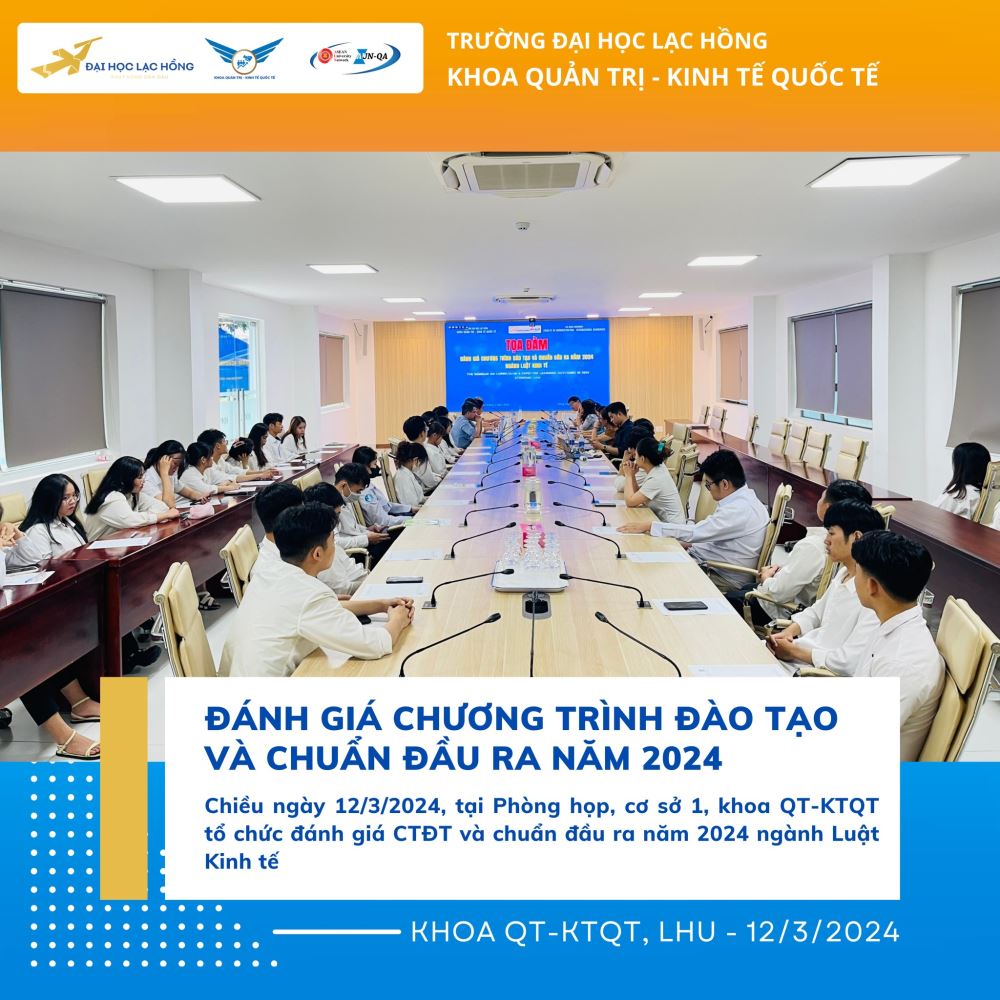
On 12 March 2024, the Faculty of Administration and International Economics organized a seminar on evaluating the training program and program learning outcomes of the Economic Law major.
Participants included:
-
PhD. Nguyen Van Tan – Head of the Faculty of Administration and International Economics;
-
MB Ta Thi Thanh Huong – Deputy Head of the Faculty of Administration and International Economics;
-
MB Huynh Thi Nhu Hieu – Head of the Department of Business-Commercial Law;
-
MB Vu Thi Thanh Huyen – Head of the Department of Financial-Banking Law.
Alongside the above lecturers and staff were invited guests from various units. The seminar was successfully held and received many contributions, updating a number of new points with the objective of improving and enhancing the quality of training at the Faculty of Administration and International Economics.

Accompanying the Faculty and students, the Faculty of Administration and International Economics was honored to welcome special guests from the following units:
-
Mr. Nguyen Truc Thien – Judge, Bien Hoa City People’s Court;
-
Mr. Doan Van Tram – Member of the Dong Nai Bar Association;
-
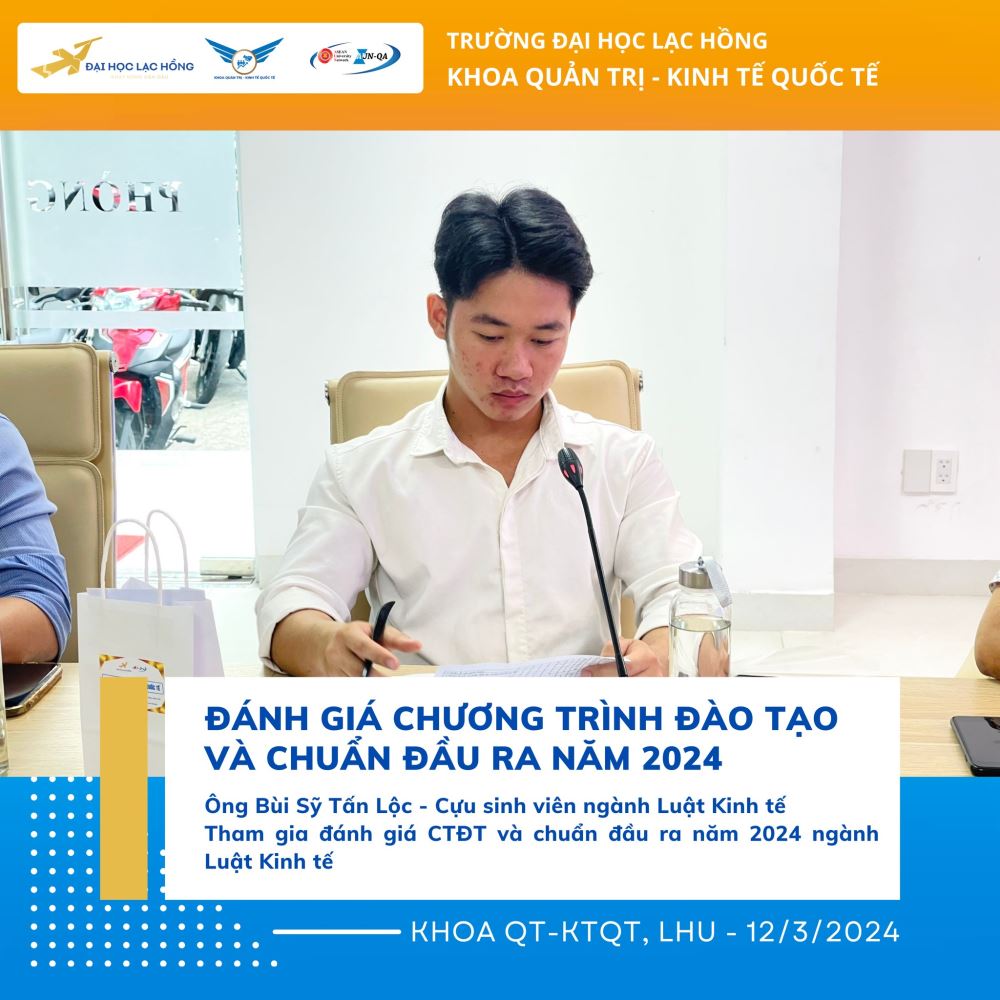
Mr. Bui Sy Tan Loc – Alumni.
-
MB Huynh Thi Nhu Hieu, Head of the Department of Business-Commercial Law, introduced the training program of the major to the distinguished guests. After the introduction, the expert guests actively contributed opinions and proposed several solutions to improve and enhance the training quality of the major in accordance with current trends, as well as offering guidance for lecturers and students to change mindsets and reinforce more effective learning.
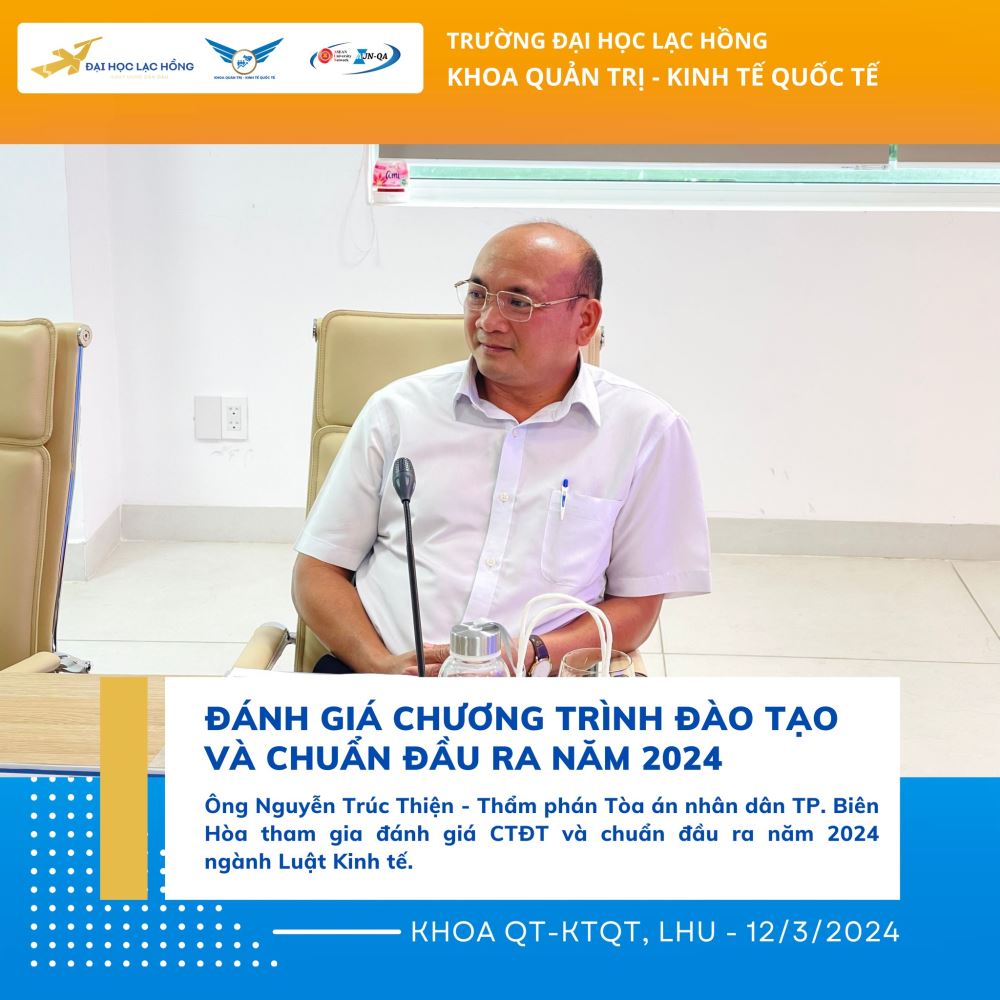
According to Mr. Nguyen Truc Thien, courses such as Ho Chi Minh Thought, History of the Communist Party of Vietnam, and Constitutional Law should be arranged in early semesters to ensure logical coherence with subsequent courses. International Public Law and International Private Law should be scheduled in the same semester because they complement each other with interrelated provisions. Additionally, the English for Special Purposes course should be placed in semesters 1 or 2 to allow more room for specialized law courses in later semesters.

Mr. Doan Van Tram suggested that in the second semester Constitutional Law should be taught before Administrative Law for better logical sequencing. Administrative Law should follow Civil Law after students have grasped basic legal knowledge. Civil Procedure Law should be arranged earlier, followed by Enforcement of Judgments. Mr. Tram also recommended splitting some content into separate courses — for example, Civil Judgment Enforcement should be its own subject because it frequently involves issues related to enterprise legal compliance.
He emphasized that Legal Drafting Techniques should be a compulsory course due to frequent real-world challenges students encounter. The Faculty could also consider embedding contractual drafting techniques into Commercial Contract Drafting. Moreover, Criminal Procedure Law should remain compulsory because criminal law and criminal procedure serve as fundamental legal frameworks. The Legal Thinking course, when taught too early, presents difficulties for students who have not yet acquired foundational legal knowledge.
According to Mr. Bui Sy Tan Loc, the Legal Research Methods course should be scheduled for semester 5 or 6 to prepare students for research activities in semester 7. The Faculty could consider combining Criminal Law and Criminal Procedure Law into one subject. He also recommended adding a course on Occupational Safety and Health Law because this area is important to businesses during production, labor usage, and compliance activities.
After the expert contributions, the students actively raised long-standing questions, and the experts provided answers and offered support solutions to help students continuously develop themselves.
After a period of valuable sharing on multiple noteworthy topics, the seminar concluded successfully. The lecturers and students received many lessons and insights from the experts. All participants committed to working together to elevate the quality of teaching and training many future generations in the most effective and trend-aligned manner.
